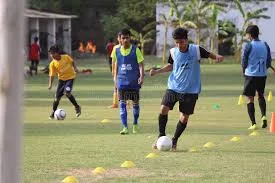
There is no single age that guarantees success in sports. Every child grows, learns, and develops at a different pace. What matters most is not how early a child starts competing but whether they are physically, emotionally, and mentally ready to enjoy the experience. A healthy sports journey should always focus on long-term development rather than short-term victories.
There Is No Perfect Age for Every Child
Parents often look for a specific age that experts recommend, but sports development does not follow a fixed timeline. Some children naturally enjoy competition from an early age, while others need more time to build confidence and develop their skills. Instead of comparing children with others, parents should pay attention to their child's interest, enthusiasm, and willingness to learn.
A child who loves practicing, enjoys learning new techniques, listens to coaches, and looks forward to training sessions is often better prepared for competition than a child who participates only because of pressure from family or friends. Passion for the sport should always come before competition.
Early Childhood Should Be About Enjoyment
During the early years, children benefit more from movement than competition. Running, jumping, balancing, catching, throwing, and coordination activities help build the foundation for almost every sport. At this stage, children are still developing physically, and introducing too much competitive pressure may reduce their enjoyment of the game.
Sports should feel exciting rather than stressful. Whether they are kicking a football, learning to swim, or playing simple cricket games, the objective should be to encourage curiosity, confidence, and a love for being active.
The School Years Bring New Opportunities
As children grow older and enter primary school, they begin understanding rules, teamwork, and discipline. This is often the stage where school competitions and local tournaments become valuable learning experiences. Winning is still not the primary goal. Instead, children start understanding responsibility, cooperation, and the importance of regular practice.
Parents should remember that success at this stage is measured by improvement, not medals. Every practice session teaches children something new, whether they win or lose.
The Right Time for Serious Competition
Many children become more committed to sports as they approach their teenage years. They begin developing stronger technical skills, improved fitness, and greater emotional maturity. This is usually the period when structured coaching, district tournaments, and state-level competitions become meaningful.
However, parents should avoid assuming that every child must follow the same path. Some athletes develop quickly, while others reach their potential later. Both journeys are completely normal.
Emotional Readiness Matters as Much as Physical Ability
One of the biggest mistakes parents make is focusing only on physical talent. A child may be fast, strong, or technically skilled but may not yet be emotionally prepared for competition. Competitive sports involve victories, defeats, criticism, pressure, and expectations.
Children who can accept mistakes, recover from losses, respect coaches, and continue improving after setbacks are often more prepared for competitive sports than children who simply perform well during practice. Emotional resilience becomes one of the most valuable qualities in every athlete's journey.
The Role of Parents Is More Important Than Many Realize
Behind every successful athlete is usually a parent who quietly supports them every step of the way. Parents wake up early for practice sessions, travel long distances for tournaments, celebrate small achievements, and provide encouragement after difficult matches.
Children do not always remember every trophy they win, but they almost always remember how their parents made them feel. Positive encouragement builds confidence, while constant pressure can reduce a child's motivation to continue playing.
Instead of asking, "Did you win?" parents can ask, "Did you enjoy playing?" or "What did you learn today?" These simple conversations help children develop a healthy relationship with sports.
Avoid Comparing Your Child with Others
Every sports ground has children who develop at different speeds. Some may appear stronger or more skilled, while others are still learning the basics. Comparing children with teammates or opponents often creates unnecessary pressure and reduces self-confidence.
Sports should be viewed as a personal journey. The goal is continuous improvement rather than outperforming everyone else. A child who consistently develops new skills over several years often achieves greater long-term success than someone who experiences early success but loses interest later.
Success Is Built Through Consistency
Parents sometimes believe that participating in more tournaments automatically creates better athletes. In reality, consistent practice, quality coaching, proper recovery, and enjoyment of the sport contribute much more to long-term development than frequent competition.
Athletes improve through thousands of small improvements rather than one big victory. Regular training, discipline, and patience gradually build the confidence and ability required for higher levels of competition.
Recording Progress Can Make a Difference
As children participate in tournaments, school competitions, and coaching programs, they gradually build an impressive sports journey. Match videos, certificates, medals, photographs, and achievements tell the story of their progress over time.
Maintaining a digital record of these accomplishments helps parents organize their child's sports journey while also making it easier to showcase improvements whenever opportunities arise. A well-maintained sports profile allows young athletes to present their achievements in a professional and organized manner as they continue developing their skills.
Every Child Has Their Own Timeline
Some world-class athletes began training at a very young age, while others discovered their true potential much later. There is no universal formula for success because every child grows differently. The most important thing is to create an environment where children feel motivated to learn, enjoy the game, and continue improving year after year.
Parents should remember that the objective is not to create champions overnight. The objective is to help children develop confidence, discipline, teamwork, resilience, and a lifelong love for sports.
Conclusion
There is no perfect age for a child to start competitive sports because every young athlete follows a unique path. The best time to introduce competition is when children are physically capable, emotionally prepared, and genuinely excited to participate. Rather than focusing only on winning, parents should encourage learning, celebrate progress, and support their child's development at every stage.
Sports are about much more than trophies. They teach discipline, responsibility, confidence, and perseverance—qualities that benefit children throughout their lives. When parents provide encouragement instead of pressure and focus on long-term growth instead of immediate results, they give their children the greatest opportunity to enjoy sports and reach their full potential.