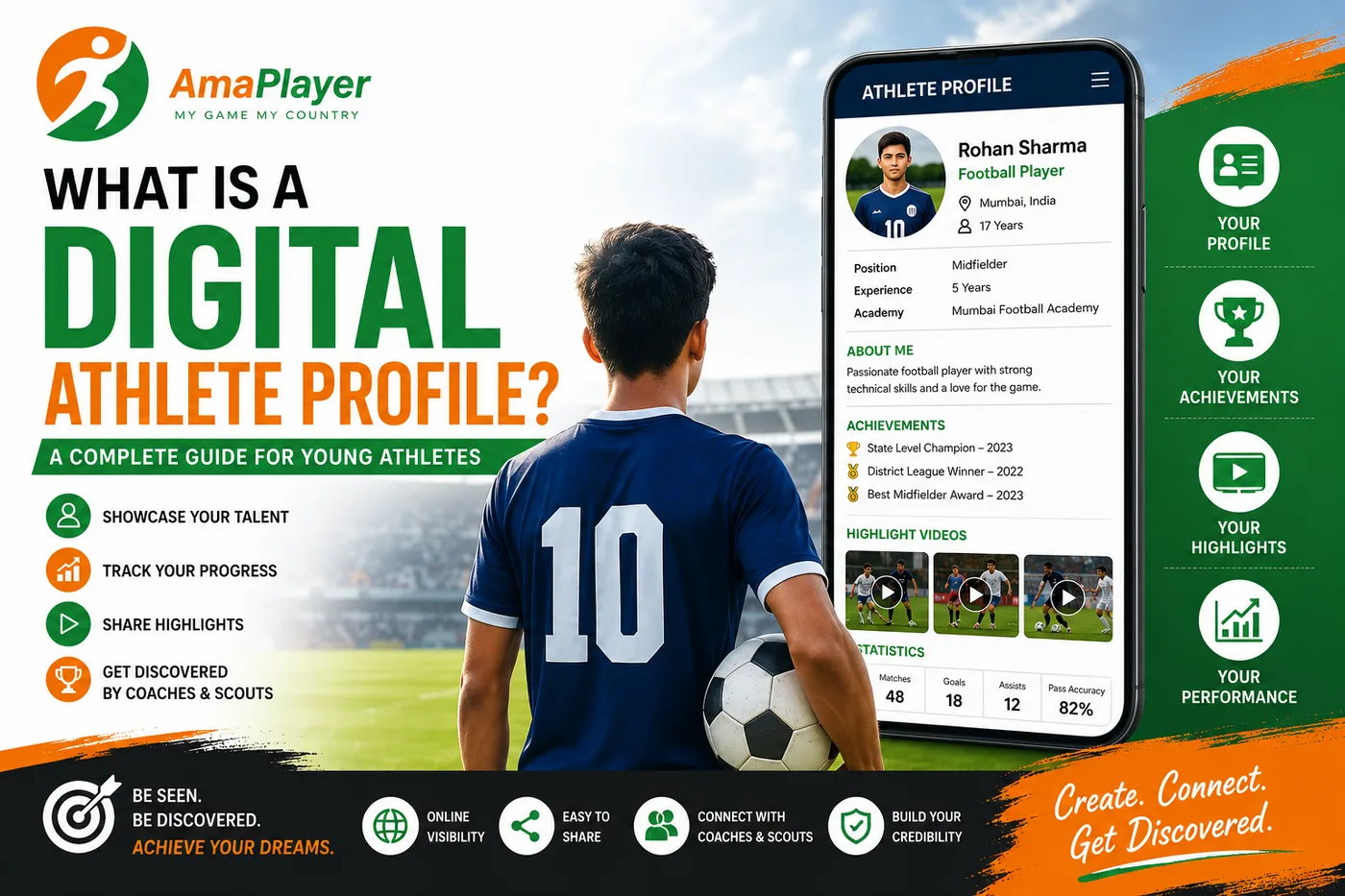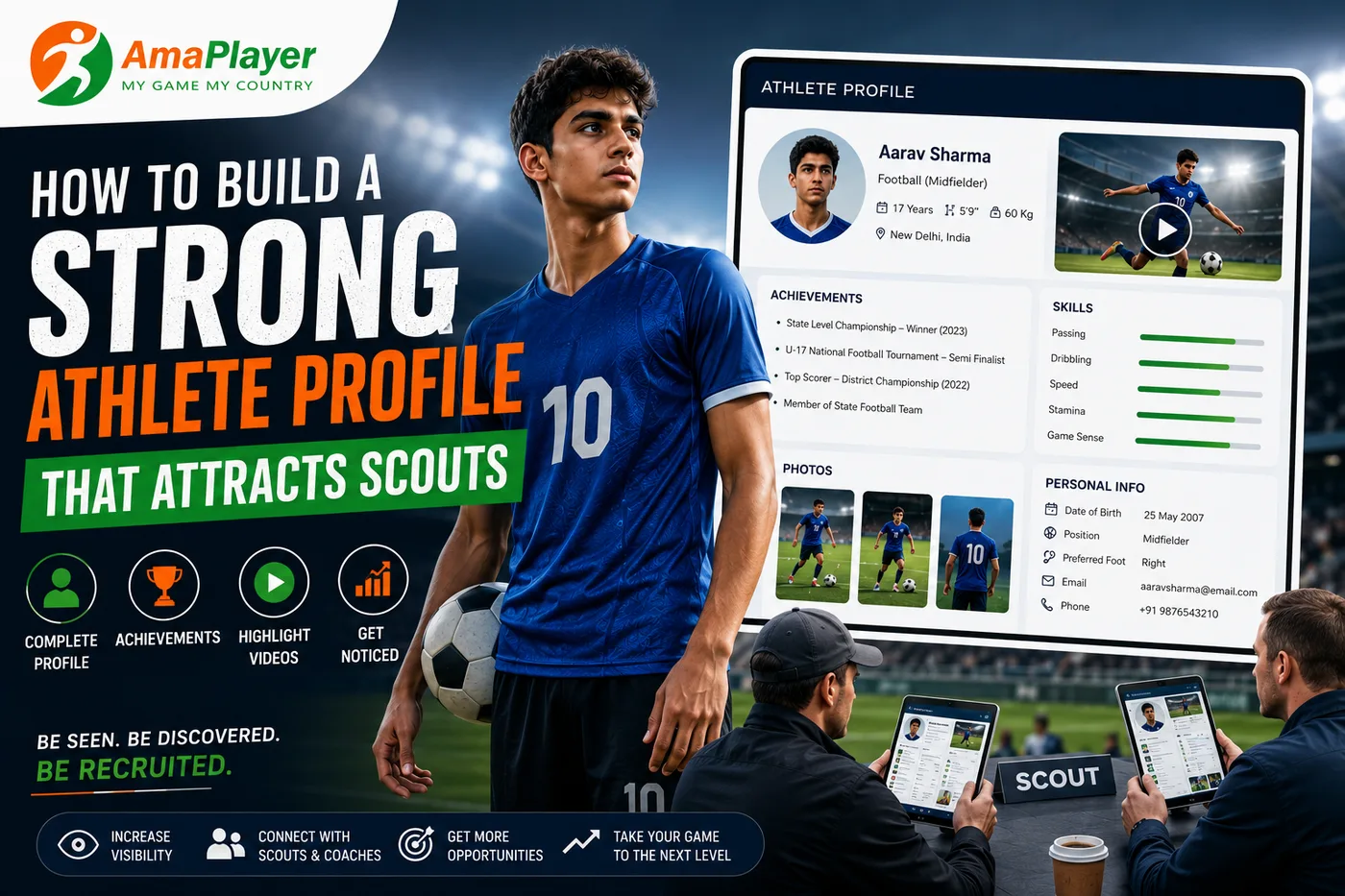
An athlete profile can help coaches understand your sport, experience and goals. A strong profile also protects the parts of your life that do not need to be public. Young athletes and their families can use this checklist before posting a profile, photo or match clip.
## Put your sport first
Share details that help someone understand your game: your sport, position or event, team or academy if you are comfortable sharing it, competition results, achievements and a short highlight. Keep claims accurate and add dates or context so a coach can understand what they are seeing.
For younger players, a broad age group is often enough for a public introduction. You do not need to put every personal detail on a profile to show your ability.
## Keep private information private
Do not post your home address, personal phone number, exact date of birth, school timetable, daily training routine, identity documents or account passwords. Avoid sharing your live location or checking in while you are still at a regular training ground. A venue name and a post made after an event can be enough context without revealing where you are right now.
UNICEF's [online privacy checklist for parents](https://www.unicef.org/parenting/child-care/online-privacy) recommends reviewing what personal information children share, checking privacy settings and helping them make thoughtful choices online.
## Check clips and photos before sharing
A highlight should show your performance clearly and briefly. Before you post it, look at the whole frame: does it reveal a school badge, a car number plate, a sign near your home or another detail you would rather keep private? Check the video's location tags and remove them if they are not needed.
Get permission before posting teammates or opponents in a clip, especially if they are under 18. Ask a parent or guardian to review public posts with younger athletes. If a teammate does not want to appear, trim or blur them out.
## Agree on a contact plan
Talk with your family about how coaches or organizations should reach you. Use the platform's official contact options where available, and let a trusted adult help review unexpected messages. Never share login codes, passwords or payment details with someone who says they can guarantee selection, a scholarship or a trial.
Privacy settings vary across apps, so review them with an adult and check who can view your profile, photos and videos. UNICEF also encourages families to discuss what is safe to share and to revisit those choices as children grow.
A useful sports profile makes your achievements easy to see and your private life harder to expose. Share the parts of your journey that support your goals, pause before posting, and ask for help whenever a message or request feels uncomfortable.